High-output energy generation where demand is greatest
Modern commercial and industrial operations are increasingly dependent on reliable electricity.
From warehouses and manufacturing facilities to data centres, logistics hubs and large commercial developments, energy availability can directly influence productivity, operating costs and the ability to expand.
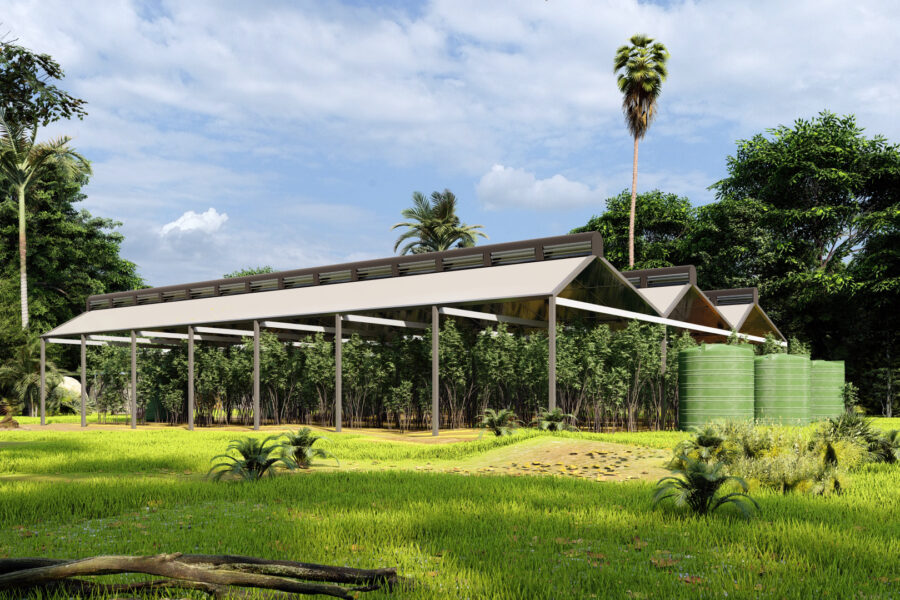
Neogeia is developing scalable hybrid energy systems that combine wind, solar and emerging technologies to generate power closer to where it is needed.
The objective is simple: increase energy resilience while reducing dependence on conventional centralised supply.
Generation at the point of demand
Large energy users often require substantial infrastructure to deliver electricity from centralised generation to the point of consumption.
Distributed generation offers another approach.
By placing renewable generation directly alongside commercial and industrial demand, energy can be produced where it is consumed, reducing reliance on distant generation and creating opportunities for greater energy independence.
Neogeia’s modular approach allows systems to be configured according to the requirements of individual sites, with capacity potentially expanding as demand grows.
Hybrid generation for greater resilience
Wind and solar generation have complementary characteristics.
Combining multiple renewable technologies can create a more diversified generation profile, while storage and intelligent energy management can further improve the ability of a system to respond to changing demand.
Neogeia is developing hybrid high-output systems around this principle, with additional technologies being explored as the platform develops.
The result is the potential for renewable energy systems that are not simply supplementary to the grid, but increasingly capable of becoming a significant component of a site’s overall energy infrastructure.
From facilities to energy networks
The opportunity becomes even greater when multiple commercial and industrial users are considered together.
Industrial parks, logistics developments and commercial precincts could potentially operate as distributed energy networks, sharing generation and balancing demand across multiple users.
This creates possibilities for localised energy infrastructure that can support new development without relying exclusively on additional centralised grid capacity.
For regions facing constrained grid infrastructure, this model could become particularly valuable.
Energy security as an economic advantage
For energy-intensive businesses, renewable generation is not only an environmental consideration.
It can become a strategic economic asset.
Greater control over energy generation has the potential to reduce exposure to electricity price volatility, improve resilience and provide greater certainty for long-term operations.
Combined with the potential for reduced carbon intensity, this creates a compelling proposition for businesses looking to strengthen both their operational and environmental performance.
Neogeia is continuing to develop and validate its technologies, with further performance data, applications and commercial models to emerge as the platform progresses.
The next generation of industrial infrastructure may not simply consume energy more efficiently. It may generate the energy it needs to operate.